What I learned about meaningful work from Rudi

For years before I finished school, I dreamed about seeing the world. When I say dreamed I meant that when the graduation summer arrived, I didn't have the money to pay for traveling. My mother was concerned that I'd end up going nowhere (something she would only tell me a few years later) and one day handed me an advertisement for a job at the communal forestry service. I applied and was invited for a work trial day. At the end of my day there Rudi, the forester (Förster), offered me the job.[1]
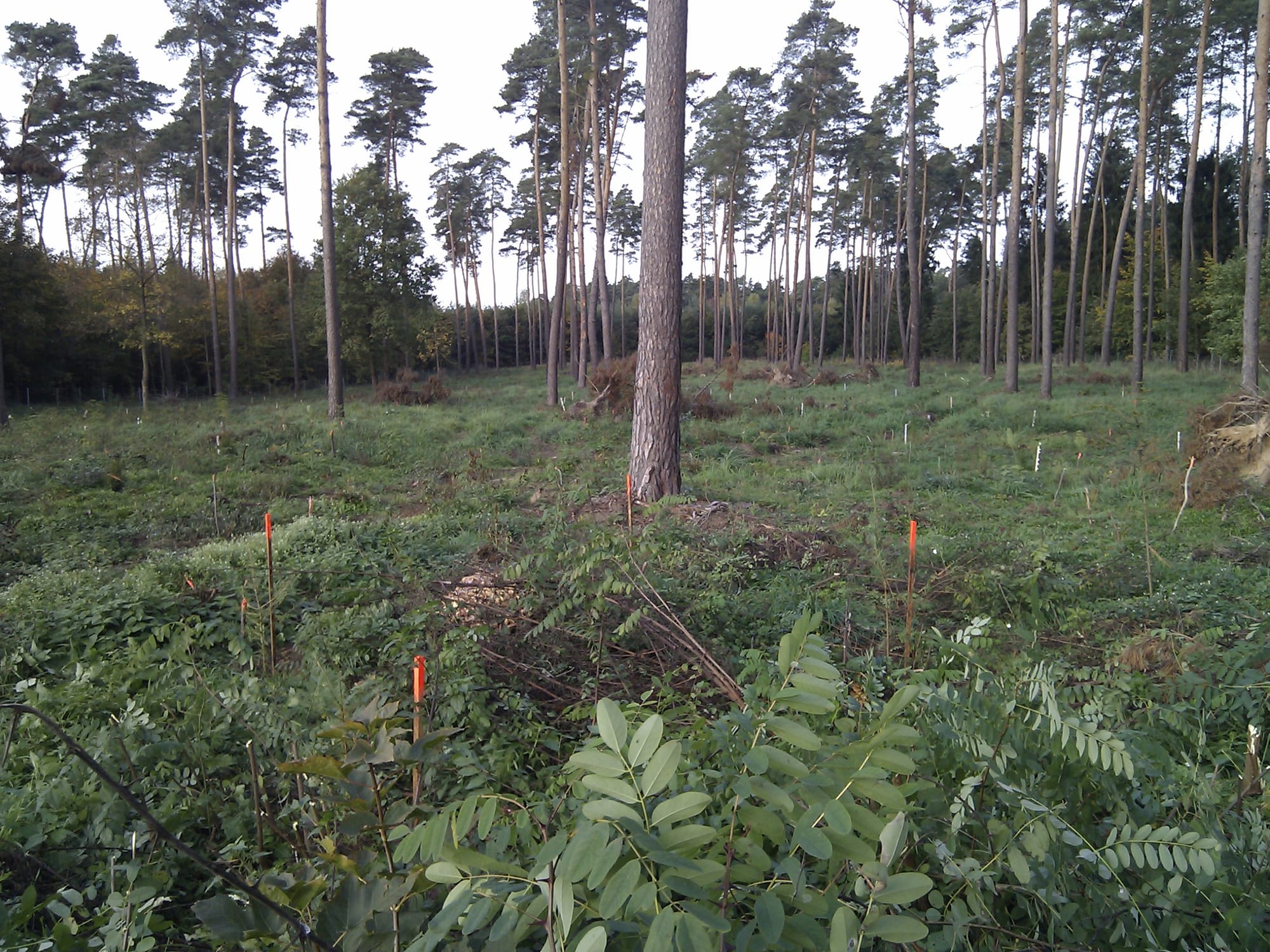
I worked there during autumn and winter. The work consisted of sowing and planting trees (mainly douglas fir, oak, beech, walnut, Schwarznuss) cutting back plants around trees planted the previous years and working on fences to guard young trees against damage caused by deer and other wild animals (Wildverbiss). On a few occasions, I got to cut down a few medium sized trees, but mostly we used our chainsaws only for trimming back branches or cutting down small Traubenkirsche trees, an invasive species in our forests. The bulk of the tree harvest was done by professional woodworkers.
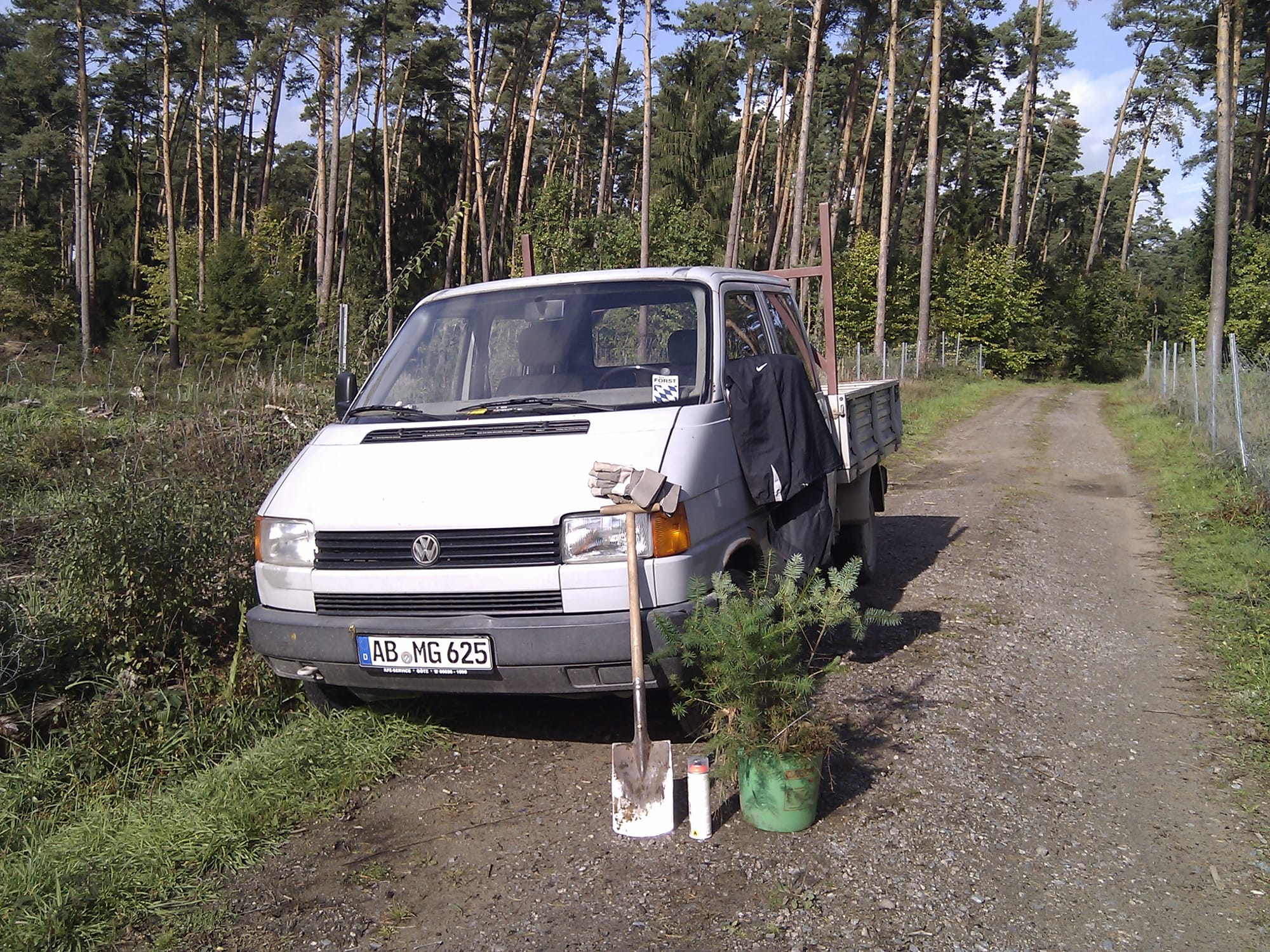
I learned things about trees and how to wield a chainsaw. But looking back, I actually learned a lot more from Rudi. He came from Southern Bavaria and stood out with his accent in Franconia. Besides his accent what made him stand out to me was that he was bustling with energy. To this day I know few 60 years olds who come close to being so passionate about their work so consistently as Rudi always was.
Rudi was guided by what he believed to be best for generations to come
Most of the tasks we did on a given day could have waited for another week or a month. Since he was employed by the state, there were no financial or reputational incentives driving him. There were public funds that he could access to when planting some kind of trees or leaving old trees in the forests and things like this. But none of that affected his own compensation or job security. Since many trees take over 100 years before being cut down for wood, even Rudis immediate successor wouldn't get to benefit of Rudi's care. It was the one after his successor or even the one after that who would depend on that. Yet Rudi worked as if he owed those future foresters, and the forests themselves, his best effort.
As an example: Rudi worried about more extreme periods of heat and droughts. It was clear that the spruce (Fichte) would be on its way out because it wouldn't manage more extreme conditions and get more and more vulnerable to bugs and fungi. Being convinced of this, Rudi introduced the douglas fir, a tree from North America that is very robust. For this he got headwind from some other professionals and environmentalists. Introducing a new species and accepting that the Fichte will not be part of the future forest didn't sit well with them. For Rudi, who cared about nothing more then a healthy forest long into the future, the resistance annoyed him but he sticked with what he believed to be right in the long run.
I grew up on a farm and I knew that my grandfather and father were concerned about the yearly harvest, the crop rotations (3-5 years) and long term soil health. So there was this element of deep care and long time horizons, but even so, observing Rudi felt different. With the farm you are taking care of your property. You know that your family and descendants will depend on the soil. Looking back, what fascinated me about Rudi was that he worked on something that wouldn’t reward him personally but mattered for generations to come.
Why I recently thought about this
After I left meshcloud, I was insecure about money for the first time since my university days. So when I started working on SaaS apps, financial freedom was high up on my list. I wasn't picky about problems to work on. Since B2B SaaS was what I knew, that's where I started looking for problems to solve.
Recently I was weighing whether to pivot or persevere. And while I explored potential pivots, I realized that besides all the adjacent, obvious topics I could explore, there is a class of important problems that I deeply cared about, but that I had never allowed myself to even dream about working on.
That thought stayed with me. So I asked myself, what if I would allow myself to work on something big? What if I worked on what I knew to be important, even if personal outcomes were much less likely and very far in the future?
That's what made me think of Rudi again after many years. And I knew he had already found his own answers to similar questions when I met him.
- The position was advertised as a German state funded "Freiwilliges Soziales Jahr" was planned to be one year. Since I wanted to see the world, I told him I could work there for only 6 months. Luckily, this meant that instead of the meager 400€/month FSJ Taschengeld, I got 9,09€/hour. So I actually managed to save enough to travel the Americas for 6 months.